Imagine a world where everyone has access to clean water, sanitation, and healthcare. Where children can go to school and learn. Where communities are peaceful and prosperous. This is the world that Rotary International is working to create.
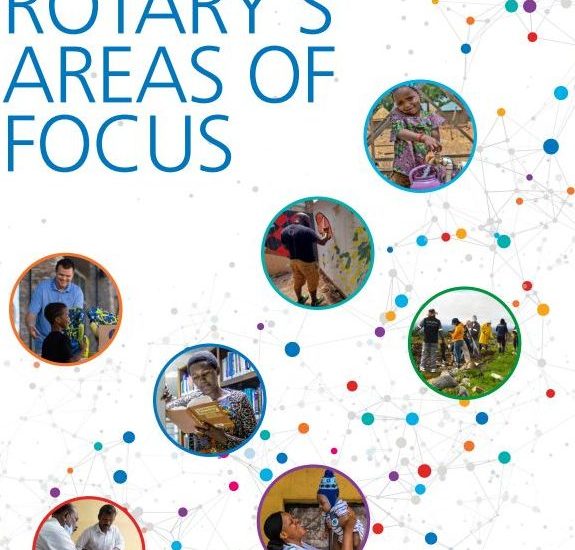
At the heart of Rotary’s humanitarian endeavors lie seven areas of focus, which are aligned with the United Nations Sustainable Development Goals, ensuring that our efforts resonate with global needs. Clubs and districts prioritize service where the community’s needs are greatest. To support this commitment, Rotary’s areas of focus offer guidance for Rotarians and Rotaractors who cultivate service projects that meet local priorities while advancing the blueprint for peace and prosperity at a global level, enhance their ability to serve while exemplifying Rotary as a global civic leader in service.
The Rotary Foundation awards global grants to finance eligible activities within the following areas of focus:
- Peacebuilding and conflict prevention
- Disease prevention and treatment
- Water, sanitation, and hygiene
- Maternal and child health
- Basic education and literacy
- Community economic development
- Environment
When choosing a project, consider the following criteria:
- Is the project relevant to the needs of the community? Do a community assessment to identify the community’s specific needs and challenges. Consider how the local community can partner with your club to meet the needs the community has prioritized.
- Is the project sustainable? Design projects that can be sustained over time, ensuring long-term impact.
- Can the project be completed with the resources available? Assess the resources available to ensure the project’s feasibility.
- Will the project have a positive impact on the lives of the people it serves? Establish clear project objectives and evaluation metrics to assess the project’s effectiveness.
- Is the project aligned with one of Rotary’s areas of focus? Ensure the project directly addresses one of Rotary’s seven areas of focus if you’ll be applying for a global grant to support the effort.
Here are some examples of how Rotary’s areas of focus can guide us in our service:
Peacebuilding and conflict prevention: Clubs can partner with institutional experts to offer training and skills development to community members in peace education, peace leadership, mediation, and conflict prevention and resolution.
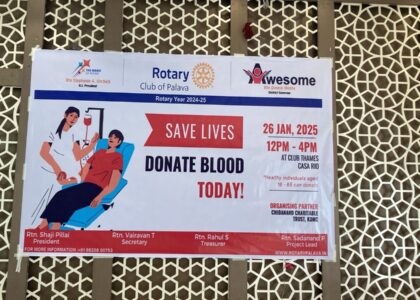
Disease prevention and treatment: Clubs can raise awareness about diseases and how to prevent them or support access to immunization programs.
Water, sanitation, and hygiene: Clubs can support access to clean water and sanitation facilities, promoting culturally appropriate hygiene education, and working to improve wastewater management.
Maternal and child health: Clubs can provide access to prenatal care and childbirth services, remove barriers for community members to access immunizations against diseases, and promote nutrition and health education for mothers and children.
Basic education and literacy: Clubs can provide access to schools and educational materials, support teacher training programs, and develop or promote literacy programs for adults and children.
Community economic development: Clubs can provide access to microfinance loans, support vocational training programs, and help improve infrastructure and access to markets.
Environment: Clubs can design projects that protect and restore land, coastal, marine, and freshwater resources or enhance the capacity of communities and local governments to support natural resource management and conservation.
Consider three best practices to guide your community service:
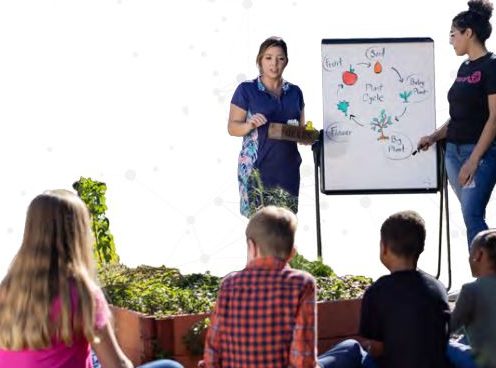
- Partner with other organizations. Clubs can often achieve more by working with other organizations that share their goals. Explore local organizations who share your goals and may be good partners in service; consider Rotary partners and Rotary Action Groups for project collaborations.
- Involve the community. It is important to involve the community in the planning and implementation of service projects. This helps to ensure that the projects meet the community’s needs and are sustainable. If there is a Rotary Community Corps in your area, connect with them. Clubs are strongly encouraged to co-develop projects with them and community members, Interact clubs, and appropriate local institutions.
- Measure and evaluate impact. It is important to measure the impact of your community service projects. This will help you to see what is working and what needs to be improved.
Rotary’s areas of focus serve as a compass, guiding clubs in developing and implementing effective community service projects. Review the Rotary’s areas of focus brochure to learn more and find ideas for starting or expanding projects in these areas.